
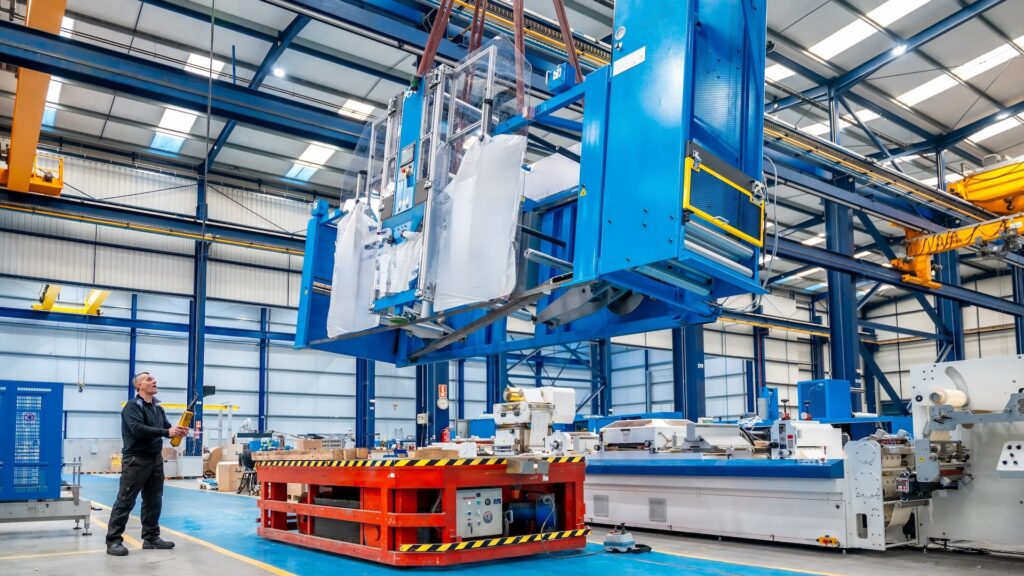
Most business leaders understand that closing a facility takes time. What they underestimate is how much can go wrong when the process lacks structure. Equipment handled out of sequence, missed compliance requirements, and undocumented assets can turn a routine shutdown into a liability that outlasts the facility itself.
Industrial decommissioning services provide the structure, accountability, and specialized knowledge needed to safely and efficiently close a facility while protecting the organization’s future operations.
How Industrial Decommissioning Services Differ from Standard Facility Closure
A typical facility closure involves mainly administrative tasks, such as ending a lease or transferring ownership, but industrial decommissioning is much more comprehensive. It includes systematically shutting down operational systems, safely removing and disposing of heavy equipment, verifying environmental compliance, and documenting every asset on-site.
While a standard closure might only require cleaning crews and moving trucks, industrial decommissioning involves project managers, compliance experts, equipment riggers, and detailed planning that considers the specific needs of the facility and its equipment inventory.
When Does a Business Need Industrial Plant Decommissioning?
Industrial plant decommissioning becomes necessary in a number of scenarios, including:
- A facility reaching the end of its operational life
- Production is consolidating to another location
- Preparing a site for sale, redevelopment, or new occupancy
- Regulatory requirements tied to environmental compliance or equipment warranties
In each case, the stakes are high enough that a structured, professionally managed approach is the only responsible path forward.
4 Key Operational Benefits of Professional Industrial Decommissioning Services
The value of professional oversight during a facility shutdown extends well beyond simply getting the job done. Here is what organizations gain when they engage experienced industrial decommissioning services.
Structured Project Management and Accountability
Industrial decommissioning involves many interconnected tasks that must be done in the correct order. Equipment needs to be safely disconnected before it can be removed. Environmental assessments must be completed before certain materials are disposed of. Vendor schedules need to match the facility’s operations. Without a dedicated project manager to oversee all these steps, delays and compliance issues can occur.
A professional decommissioning partner establishes a clear project timeline, assigns accountability at every phase, and ensures that nothing falls through the cracks. This structured approach transforms what could be a chaotic shutdown into a controlled, predictable process.
Safe and Compliant Equipment Removal
Industrial facilities house equipment that needs specialized handling, like hazardous machinery, environmentally regulated systems, or assets with manufacturer decommissioning requirements. Removing such equipment without expertise poses serious liability risks.
Professional industrial decommissioning services ensure that every piece of equipment is handled in accordance with applicable regulations, manufacturer protocols, and environmental standards. This protects the organization from fines, legal exposure, and the reputational damage that can result from a compliance failure during a high-visibility facility closure.
Asset Recovery and Inventory Documentation
Not everything on the floor of a decommissioned facility is destined for disposal. Many organizations are surprised to find residual value in their equipment inventory when it is properly assessed and documented. Used industrial equipment can retain 30% to 70% of its original value when resold or refurbished, making asset recovery a meaningful financial consideration in any decommissioning plan.
A professional partner conducts a thorough inventory of all assets before removal begins, identifying opportunities for resale, redeployment, or salvage. This documentation also serves an important operational purpose, creating a verified record of what was on-site, where it went, and how it was handled, which is often required for regulatory sign-off or future audits.
Minimizing Downtime Through Phased Execution
Even in a decommissioning scenario, where production is winding down rather than ramping up, unplanned disruptions can accelerate revenue loss and complicate the transition. A phased execution approach enables organizations to maintain partial operational capacity during decommissioning. Non-critical systems and equipment are addressed first, preserving the facility’s core functions for as long as the business requires. This measured approach reduces financial exposure and gives the organization greater control over the timing and pace of the shutdown.
Unplanned downtime costs industrial manufacturers an estimated $50 billion per year, with an average cost of $260,000 per hour.
Source: The Alarming Costs of Downtime
How Industrial Plant Decommissioning Supports Future Relocation Goals
For many organizations, decommissioning is not the end of the story, but rather the first chapter of a relocation. A facility that has been properly decommissioned is easier to vacate, easier to hand over to a new owner or landlord, and far less likely to generate post-departure liability for the organization.
When decommissioning and relocation are managed by the same partner, the two processes become complementary rather than sequential. Equipment that is inventoried during decommissioning can be evaluated for reuse at the new facility. Compliance documentation generated during the shutdown can streamline permitting and occupancy at the destination. The result is a more efficient, cost-effective transition that protects both ends of the move. This is a fundamentally different outcome than what organizations experience when decommissioning is treated in isolation, a lesson well-illustrated by the challenges that arise during uncoordinated plant shutdowns when planning is delayed or deprioritized.
What to Look for in an Industrial Decommissioning Partner
Not all decommissioning providers bring the same level of expertise to the project. When evaluating your options, it is vital to prioritize partners with the following traits:
- Demonstrated experience managing complex industrial shutdowns
- A clear process for compliance documentation
- Established relationships with equipment riggers, environmental specialists, and asset recovery vendors
Equally important is the partner’s approach to project management. A decommissioning engagement with no defined timeline, no single point of accountability, and no formal close-out process is likely to generate surprises. The right partner brings structure to the process from the first site assessment through to the final facility sign-off.
Plan Your Industrial Decommissioning with Confidence
In our experience, the organizations that struggle most with a facility shutdown are those that waited too long to engage professional industrial decommissioning services. By the time the complexity becomes visible, the timeline is compressed, and the options are limited. Getting the right partner involved early is often the difference between a controlled close and a costly one.
Pivotal Project Management brings the same structured, accountability-driven approach to industrial decommissioning that we apply to every facility transition we manage. Whether you are preparing to close a single facility or coordinating a multi-site shutdown, we act as your advocate from the first assessment through to final close-out. Contact us to start the conversation.